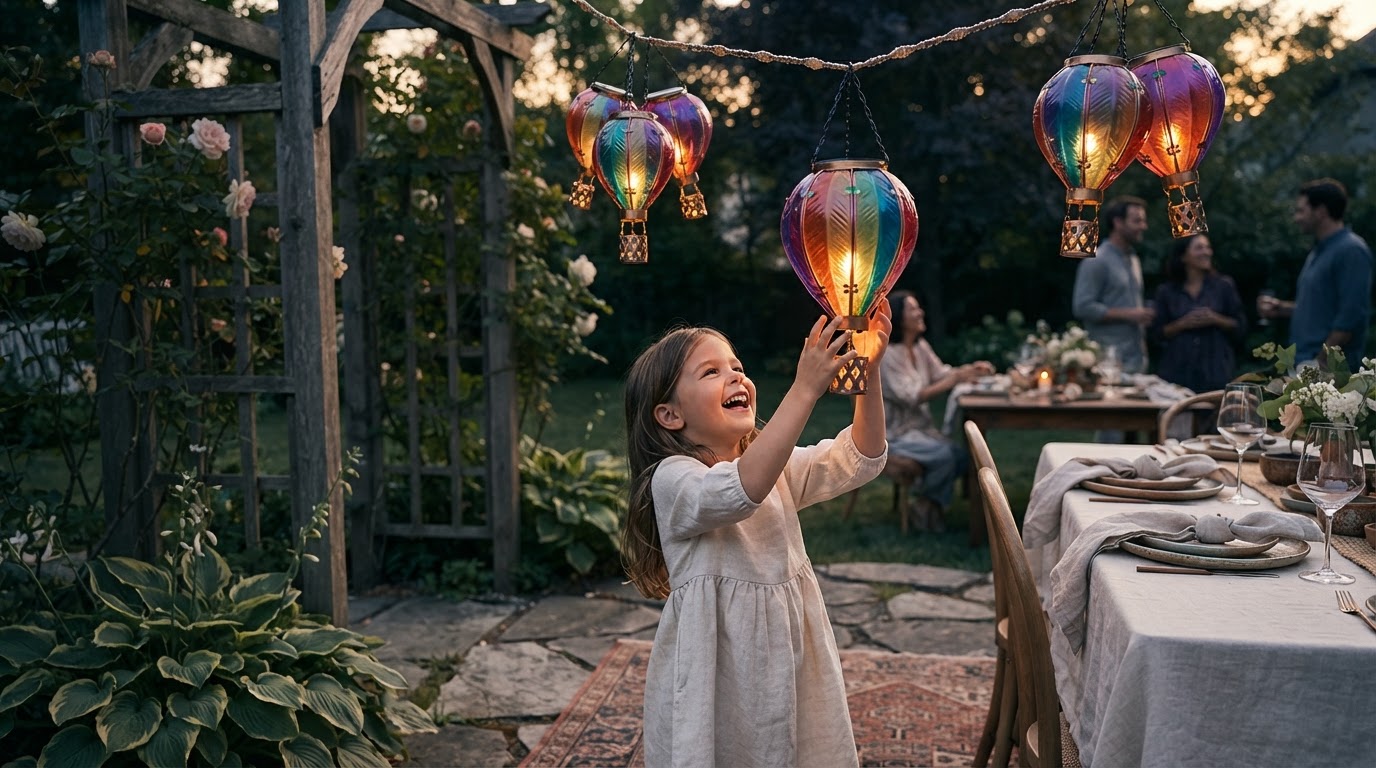
Solar Balloon Lantern Backyard Party Decor Strategies
 Maya ChenContributing Editor
October 15, 2026. This analysis evaluates the technical deployment of the Solar Balloon Lantern for high-density backyard social events. It serves homeowners and event planners seeking to eliminate the logistical failures common in traditional temporary lighting.
The Inefficiency of Temporary Lighting Infrastructure
The conventional wisdom says that successful backyard lighting requires a complex network of extension cords, power strips, and high-wattage bulbs. However, this approach ignores the inherent safety risks and energy waste associated with residential outdoor power grids. Most homeowners attempt to bridge the gap with budget-friendly alternatives. According to Pinterest's curation of Outdoor Party Lights, many people resort to repurposing old chandeliers by replacing bulbs with solar lights to create a makeshift garden focal point. While aesthetically pleasing in a still photograph, these heavy, glass-laden fixtures pose significant installation hazards and lack the mobility required for dynamic event spaces.
Here's the part nobody talks about: the labor-to-lumens ratio. Setting up traditional wired systems for a single evening often requires hours of cable management and risk mitigation for trip hazards. Furthermore, the reliance on fixed power outlets dictates the flow of the party, often crowding guests into specific zones while leaving larger areas of the yard in darkness. The DIY market, highlighted by Pinterest's Solar Party Lights collection, suggests transforming Dollar Tree items into lighting, but these often fail to provide sufficient candlepower for safe navigation. The data suggests that a decentralized, high-efficiency solar approach is the only way to scale lighting across a diverse landscape without increasing the physical footprint of the equipment.
Engineering the Solar Balloon Lantern for Social Density
The Solar Balloon Lantern addresses the specific failure points of both heavy DIY fixtures and tethered electric lights by prioritizing weightlessness and autonomous charging. Unlike solar powered patio festival lights, which still require a structural line for suspension, the Solar Balloon Lantern functions as a standalone unit that can be placed in areas where stringing lines is physically impossible. The device utilizes high-efficiency photovoltaic cells integrated into the top of the balloon structure, charging an internal battery during daylight hours to power an LED array at night. This eliminates the need for the "solar chandelier" hacks mentioned previously, which often fail because the solar panels are shaded by the very structure they are meant to power.
When planning for glowing balloon decor outdoor, the primary concern is usually duration. The Solar Balloon Lantern is engineered to maximize battery life by using low-draw LEDs that maintain a consistent Kelvin temperature, avoiding the harsh blue light common in cheap solar alternatives. Because the lanterns are inflatable, they offer a diffused light source that reduces glare, a critical factor when guests are interacting in close proximity. This differs significantly from solar balloon string lights, which provide point-source lighting that can be visually disruptive. By using a balloon-style diffuser, the lantern creates a soft ambient glow that covers a wider radius per unit than a standard bulb. This allows for a lower density of fixtures to achieve the same level of visibility, simplifying the setup process.
A Technical Framework for Backyard Lighting Deployment
Run the math: to light a 500-square-foot patio using traditional methods, you might need three 50-foot strands of lights and two heavy-duty outdoor extension cords. With Solar Balloon Lanterns, the setup is reduced to inflating the units and placing them in direct sunlight. To ensure the deployment is successful, planners should follow a rigorous evaluation of their space rather than following generic DIY trends. The focus must remain on the intersection of lumen output and battery longevity. I'll change my mind when wired systems can offer the same level of portability without the associated fire and trip risks.
- Verify the solar exposure of the deployment zone for at least 6 hours of direct sunlight.
- Calculate the required quantity based on a 10-foot radius of usable light per lantern.
- Check the integrity of the inflation valves to ensure structural stability throughout the event.
- Position lanterns at varying heights to create depth, avoiding a flat lighting plane.
- Ensure that no secondary light sources (like porch lights) are hitting the sensors, which can trigger an accidental shut-off.
- Test the transition from dusk to full darkness to calibrate the automated sensors.