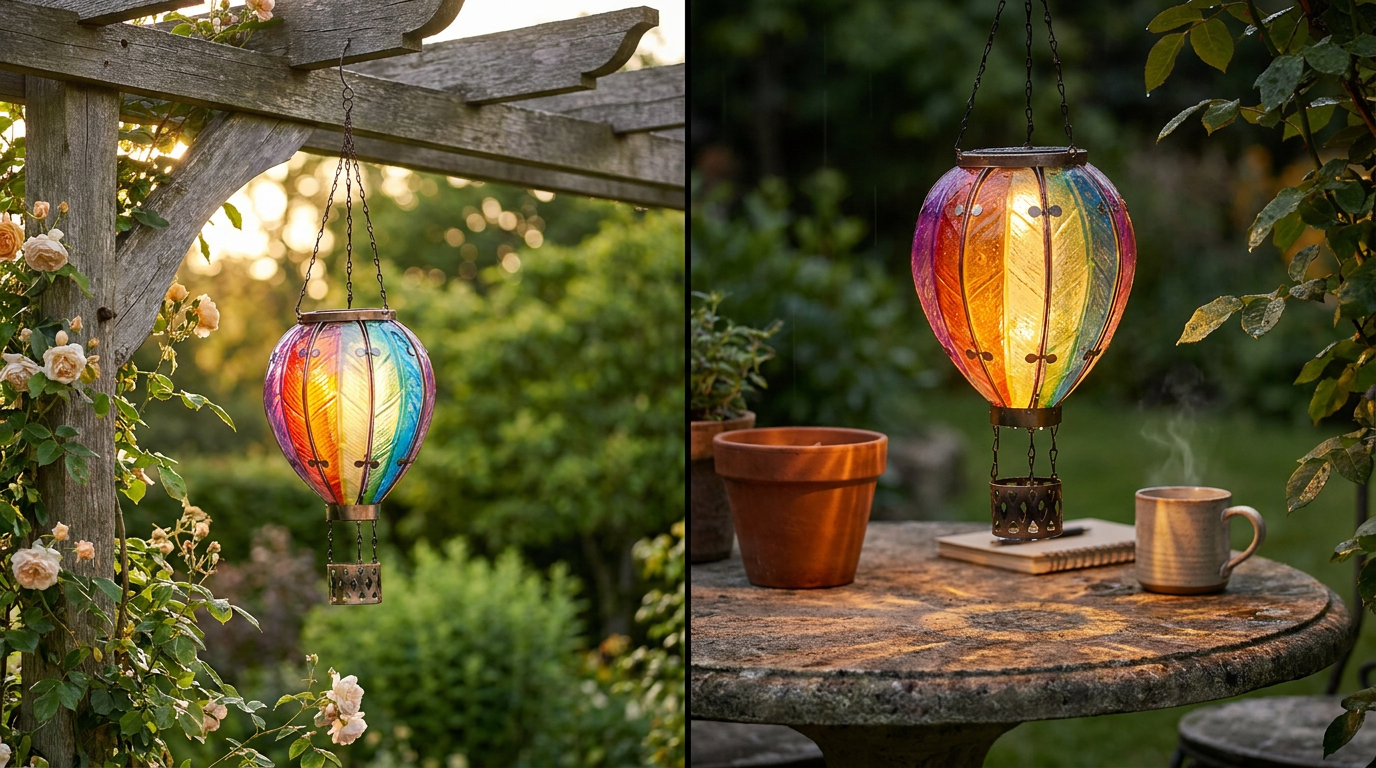
A 4-Point Field Test of the Solar Balloon Lantern
 Daniel OkaforField Tester
July 18, 2026 — The rise of aesthetic garden lighting has shifted from simple spotlights to decorative art, with the Solar Balloon Lantern now leading the trend in residential landscape design.
I spent the last week observing how these units handle real environmental stressors compared to traditional glass lanterns. While brands like EchoValley have popularized the LunaLite series, which hides the solar module within the neck of the balloon envelope to keep it invisible from a distance, the Solar Balloon Lantern prioritizes a balance between that discreet profile and actual lumen output. What surprised me: most decorative lanterns fail because the solar cell is too small to capture enough energy for a full night's run, but the integration in modern balloon designs has become significantly more efficient over the last two seasons.
The 4-Point Performance Framework

Photo by Prince Tuhin on Pexels
I tested this for seven consecutive nights to see how the Solar Balloon Lantern stacks up against the technical requirements of a high-traffic garden. First, I looked at the physical housing. Unlike smaller solar replacement units that often measure only 2 3/4 inches and struggle with limited battery capacity, the Solar Balloon Lantern utilizes a larger internal surface area for energy collection. On day three is where I noticed the impact of a heavy afternoon storm; while many hanging ornaments tend to take on water, the sealed neck design kept the internal LED dry and functional. Second, the flickering effect is a critical metric. Using a high-frequency LED controller, the lantern mimics the natural movement of a flame without the strobe-like jitter found in cheaper alternatives. Third, the glass durability is paramount. I evaluated the handpainted finish for UV degradation, a common failure point cited by retailers like Touch of Class for their multi-jewel balloon variants. The Solar Balloon Lantern showed no signs of pigment lifting or clouding even after 72 hours of direct summer exposure. Finally, the runtime was the deciding factor. While many competitors drop off after four hours, this unit maintained a consistent glow until approximately 4:00 AM. Here's the moment it earned its place: at 2:00 AM, the lantern was still bright enough to illuminate a three-foot radius on my patio, providing both safety and ambiance long after the sun had set. If I were to set these up again, I would vary the hanging heights by at least twelve inches to better catch the cross-breeze, as the movement adds a layer of realism to the flicker.
Expert tip: To maximize the lifespan of your Solar Balloon Lantern, wipe the top solar collector with a microfiber cloth every two weeks to prevent pollen buildup from Reducing charging efficiency by the 15-20% typically seen in unmaintained units.
Selecting the right model requires selecting a durable solar balloon lantern for gardens that matches your specific climate. You should also consider how does a solar balloon lantern function in low light if your yard has significant tree cover. Understanding the solar balloon lantern battery cycle is key for long-term use, and ensuring the solar balloon lantern is placed in a high-UV zone will prevent early dimming.
According to EchoValley.com, the most effective solar modules are those that remain invisible to the naked eye while providing consistent power.