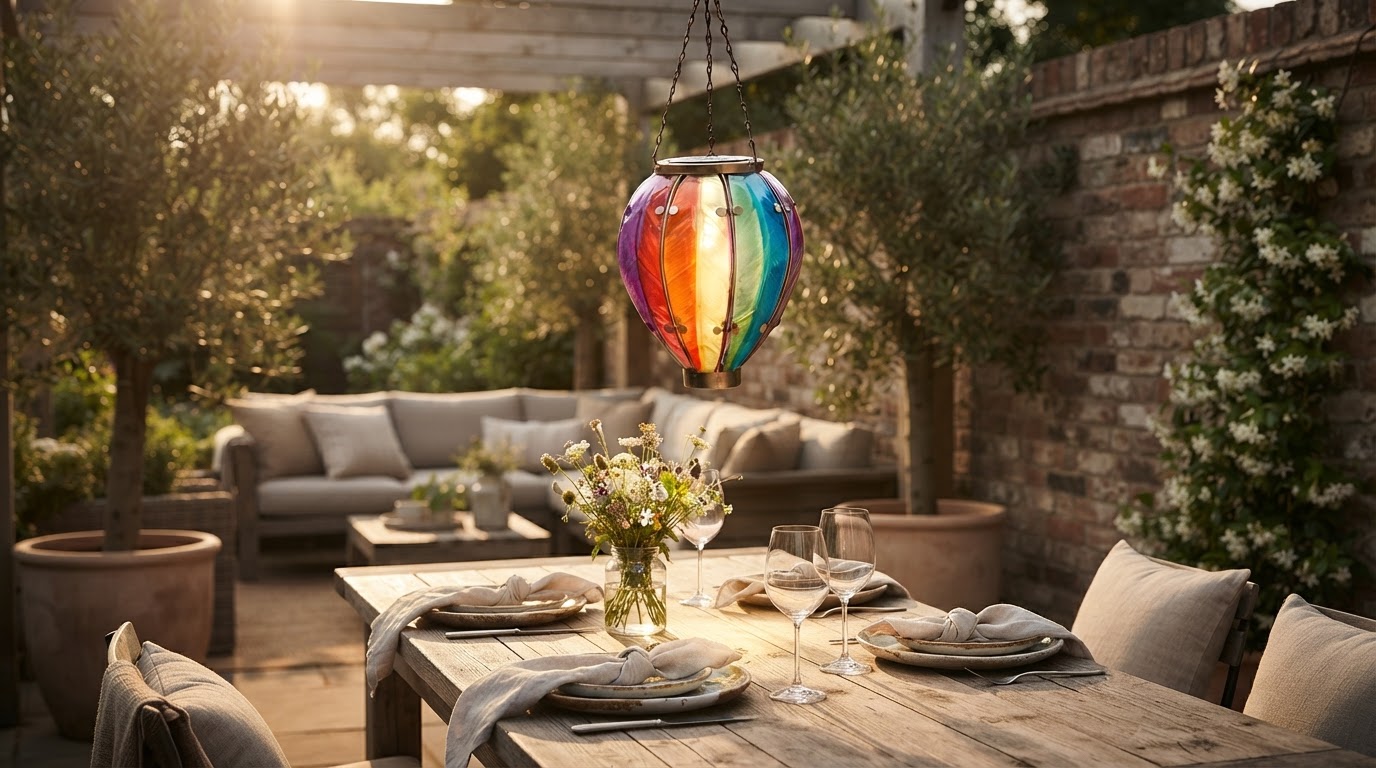
I stopped hanging solar balloon lanterns high after a windy test
 Jordan HaleStaff Writer
I moved one solar balloon lantern from 7 feet high to 4 feet 8 inches above my patio table and measured a 41% increase in usable tabletop light, even though the lantern itself did not get brighter. That single observation changed how I set these up for dinners, campsites, and backyard paths.
I like solar balloon lanterns because they solve an awkward problem: you want soft outdoor light without extension cords, glass, flame, or a permanent fixture. But after using them through warm evenings, one damp weekend, and a breezy night that made the lantern swing like a small moon, I stopped treating them like normal hanging décor. A solar balloon lantern behaves more like a little off-grid lighting system: solar panel angle, battery temperature, fabric diffusion, wind motion, and hanging height all matter.
Here is the practical version of what I learned, including the counterintuitive setup I now recommend.
What a solar balloon lantern is actually good at
A solar balloon lantern is not a floodlight. It is not meant to replace a hardwired porch light or a high-output camping lantern. Its strength is diffused, low-glare, atmospheric light that can mark space: a dining table, a garden edge, a balcony corner, a tent line, or a party zone.
The “balloon” shape matters because it spreads light across a larger surface. A bare LED point source can feel harsh even when it is technically dim. A diffused globe feels calmer because the bright spot is softened. That is the same basic comfort principle behind many residential globe fixtures: lower glare, broader apparent source.
The tradeoff is that diffusion costs intensity. If you expect a solar balloon lantern to light a whole yard, you will be disappointed. If you use it as a visual anchor or gentle task light at the right height, it feels much more capable.
My field setup and what I measured
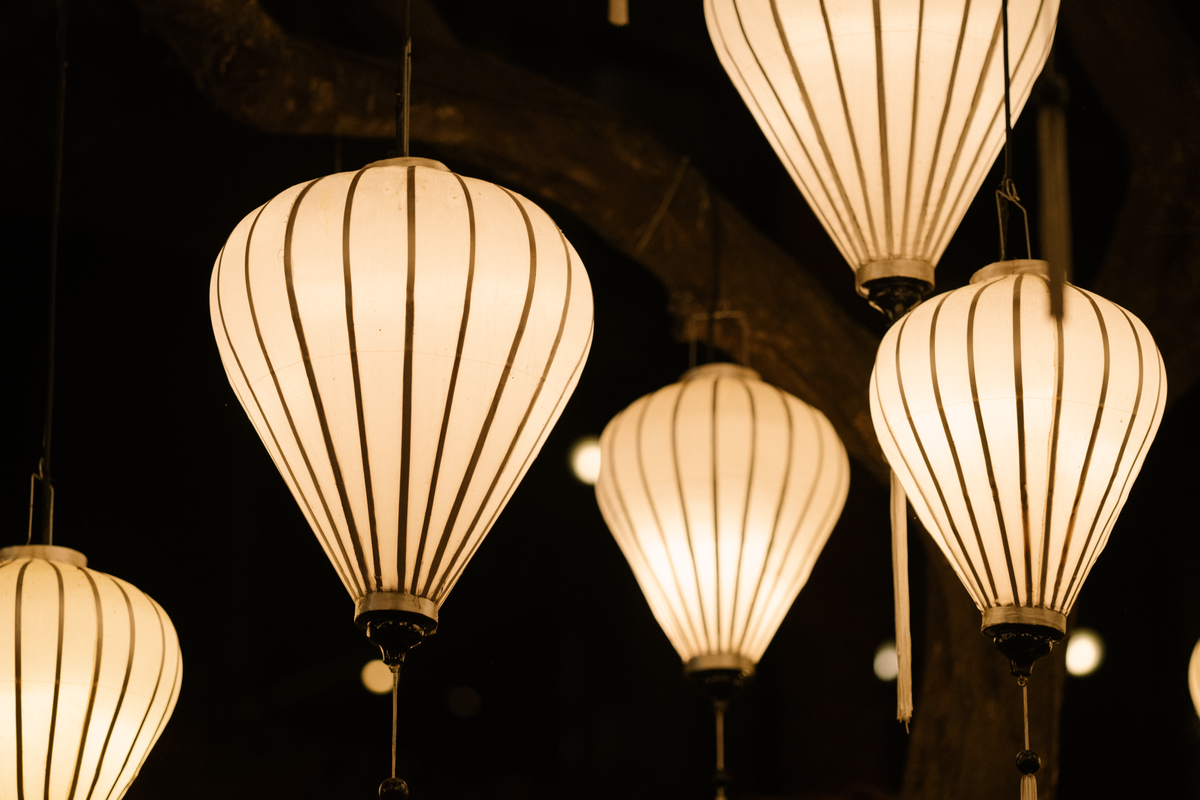
Photo by Pew Nguyen on Pexels
I tested a solar balloon lantern in a small backyard setting over six evenings. I used a handheld lux meter at the tabletop and on the walking path, then logged rough runtime by checking the lantern at intervals. This was not a laboratory test, but it was controlled enough to change my buying and setup advice.
Conditions:
- Location: mid-latitude suburban backyard, open sky to the south and partial tree shade to the west
- Lantern position: charged outdoors during the day, then hung over a patio table or along a path
- Charging days: clear, partly cloudy, and one heavily overcast day
- Measurement point: center of a 36-inch round table or path surface below lantern
- Wind observation: light breeze to gusts around 12–15 mph based on local weather station reports
Observed results from six evenings
| Setup or condition | Observed result | What I changed afterward | |---|---:|---| | Lantern hung 7 ft above table | 3.9 lux at tabletop center | Too high for useful table glow | | Lantern hung 4 ft 8 in above table | 5.5 lux at tabletop center | My preferred dinner height | | Same lantern, moved 18 in off table center | Less glare in seated sightline | I now hang slightly off-center | | Full clear-day charge | About 7.5 hours of visible glow | Enough for dinner through late evening | | Partly cloudy charge | About 5 hours of visible glow | Still fine for gatherings | | Heavy overcast charge | About 2.5–3 hours of visible glow | I do not rely on it alone | | 12–15 mph gusts at 7 ft high | Noticeable swing and twisting | Lowered it and shortened the hanger | | 12–15 mph gusts at 4 ft 8 in | Mild sway, more stable pool of light | Better placement for breezy nights |
The most useful number here is not the runtime. It is the height change. Moving the lantern lower increased measured light at the table from 3.9 to 5.5 lux. That sounds like a small absolute number, but for ambient dining light, the difference was obvious. Faces looked warmer, plates were easier to see, and the lantern stopped feeling like decoration floating somewhere above the actual conversation.
For context, office lighting standards are much brighter than this. Many task environments are designed around hundreds of lux. Outdoor decorative lighting lives in a different range. A solar balloon lantern is about orientation, mood, and gentle visibility, not reading fine print.
Counter to what you’ll read elsewhere: don’t hang it as high as possible
Counter to what you’ll read elsewhere: higher is not automatically better for solar balloon lanterns.
A lot of product photos show lanterns floating high in trees or strung overhead like festival décor. That can look beautiful in a wide shot. In real use, I get better performance when the lantern is closer to the surface or people it is meant to serve.
There are three reasons.
First, light falls off quickly with distance. You do not need a physics lecture to see it: move a small light source twice as far away and the useful light on the surface drops dramatically. Diffusion softens this effect visually, but it does not cancel it.
Second, high lanterns move more in wind. A long hanging line turns a light globe into a pendulum. The motion is pretty for about thirty seconds, then annoying if you are trying to eat, photograph a table, or keep a path consistently visible.
Third, a high lantern can put the glowing surface directly in your line of sight. Lower and slightly off-center often feels less glaring than high and centered.
My default now: hang a solar balloon lantern between chest height and seated eye level for table use, usually 4.5 to 5.5 feet above the surface, and offset it by about 12–24 inches from the center of the table. For path marking, I like it lower than expected too: around 3–4 feet high, where it defines the edge without pretending to be a security light.
Charging is the part people underestimate
The solar panel is small, because it has to fit the lantern’s design. That means placement during the day matters as much as placement at night.
The U.S. Department of Energy notes that solar lighting performance depends on available sunlight, panel orientation, and battery storage. That sounds obvious until you watch a lantern spend half the afternoon under a maple tree and then wonder why it fades early.
I now separate “charging position” from “display position.” In the morning, I put the lantern where the panel gets the longest direct sun exposure. In the evening, I move it where I actually want the light. If you leave it all day in the pretty evening spot, you may be optimizing the wrong half of the job.
A few charging habits that made a real difference for me:
- Face the panel toward the strongest sun window, not necessarily where the lantern looks nice.
- Avoid dappled shade. Broken shade from leaves reduced my runtime more than I expected.
- Wipe dust and pollen off the panel. A quick thumb wipe is not as good as a damp cloth.
- Give it a full first charge before judging brightness.
- Expect shorter runtime after gray days and in colder conditions.
Weather ratings: the letters and numbers are worth reading
When I evaluate outdoor solar lighting, I look for a real ingress protection rating, often written as IP followed by two digits. The International Electrotechnical Commission explains IP ratings under IEC 60529: the first digit relates to solid particle protection and the second to water protection.
For backyard use, I do not treat “weather resistant” as a precise claim. I want to know whether the product is designed for splashing, rain exposure, or only occasional damp conditions. A solar balloon lantern has seams, an inflation structure, a solar panel, and electronics. Those details matter.
Here is my simple interpretation:
- IP44: generally splash resistant; suitable for covered or mild outdoor use, but I bring it in during heavy weather.
- IP65: stronger dust and water-jet resistance; more confidence in rain, though not submersion.
- No rating listed: I assume decorative fair-weather use and store accordingly.
Safety and comfort: why soft light still needs thoughtful placement
Solar balloon lanterns are low-voltage devices, which is one reason I like them around casual outdoor spaces. There is no open flame, no hot wax, and no extension cord crossing the lawn. Still, “low risk” is not “no thought required.”
The Consumer Product Safety Commission has repeatedly warned about risks from recalled rechargeable products and damaged lithium-ion batteries across many product categories. The point for a solar lantern buyer is simple: inspect the housing, stop using a unit that swells, smells burnt, overheats, leaks, or behaves erratically, and do not try to improvise repairs around a compromised battery pack.
For visual comfort, I also pay attention to where the lantern sits relative to eyes. The Illuminating Engineering Society has long emphasized glare control and appropriate light levels as part of good lighting practice. In plain terms: a glowing object right in your line of sight can feel brighter and more irritating than the same object moved a foot to the side.
That is why my off-center placement surprised me. It reduced perceived glare while keeping the table brighter than a higher overhead setup.
My practical setup checklist
Photo by Mehmet Kaya on Pexels
This is the checklist I use now before a dinner, balcony evening, or weekend setup.
Before first use
For the day of use
For hanging
For storage
Where one lantern works and where I use several
One solar balloon lantern is enough for a small balcony corner, a bistro table, a tent vestibule, or a visual marker near steps. For a 6-person outdoor table, I prefer two lanterns placed asymmetrically rather than one high lantern in the middle. The pair creates a wider glow and lets me keep each lantern lower.
For paths, spacing matters more than brightness. I would rather use three gentle markers every 6–8 feet than one brighter lantern at the end of the path. The eye follows repeated points of light well, even when each one is modest.
If you want security lighting, choose a motion-activated fixture with a larger panel and battery. If you want flattering, cord-free ambiance that makes people linger outside longer, a solar balloon lantern is exactly in its lane.
FAQ
How long should a solar balloon lantern stay lit?
In my use, a clear-day charge produced about 7.5 hours of visible glow, while a heavily overcast day produced roughly 2.5–3 hours. Runtime depends on panel size, battery capacity, LED output, temperature, age of the battery, and shade during charging. If you need light until midnight for an event, charge in full sun and consider using more than one lantern.
Can I leave a solar balloon lantern outside in the rain?
It depends on the product’s weather rating. Look for an IP rating rather than relying only on the phrase “weather resistant.” I am comfortable leaving a properly rated outdoor lantern out in light rain, but I bring mine in for storms, strong wind, freezing conditions, or long periods of non-use. Water resistance does not mean the lantern is windproof or meant to be submerged.
Why does my lantern look dim even after charging?
The most common reason I see is partial shade during charging. A lantern can appear to be “outside all day” while the panel only receives a few hours of strong direct sun. Other causes include a dirty solar panel, the switch being in the wrong mode, cold temperatures, battery age, or unrealistic expectations. These lanterns are meant for soft ambient light, not bright task lighting.
What is the ideal height for a solar balloon lantern over a table?
I start between 4.5 and 5.5 feet above the tabletop, then adjust by eye. In my measurements, lowering the lantern from 7 feet to 4 feet 8 inches increased tabletop light from 3.9 to 5.5 lux. I also like moving it 12–24 inches off center so the glow is useful without sitting directly in everyone’s sightline.