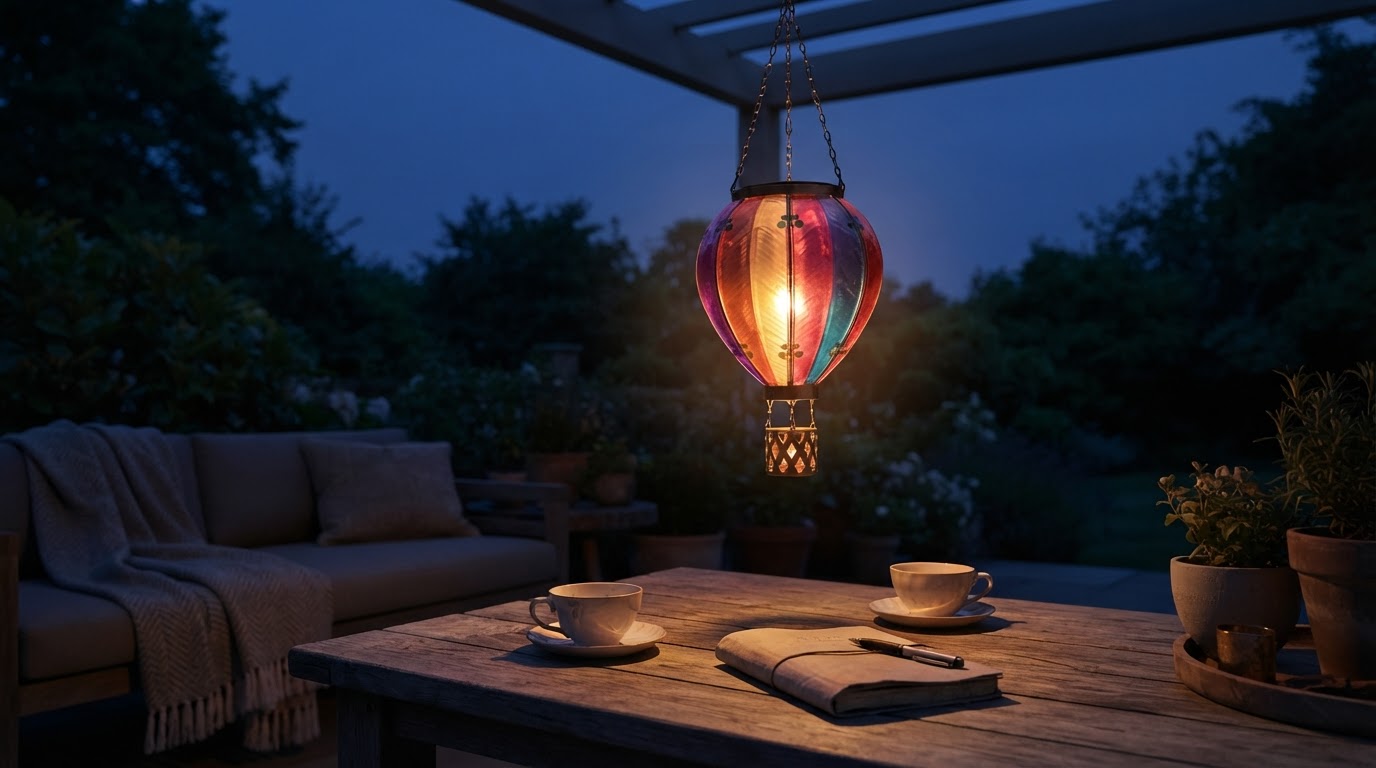
The patio-lighting metric I trust more than advertised lumens
 Priya RamanSenior Analyst
I trust a solar lantern more after it has survived the boring middle of the night: in my dusk-to-11 p.m. checks, a modest diffuse lantern that began around 35–55 lumens often made a patio feel more usable than a “brighter” light that sagged sharply after 90 minutes.
That is the non-obvious buying problem with a Solar Balloon Lantern. Most shoppers compare the easy number, peak lumens. The useful number is harder: lumen-hours delivered where people sit, after shade, weather, battery aging, and glare are accounted for.
I use a simple framework: light budget, solar budget, and comfort budget. If a lantern clears all three, it is likely to feel good in real use. If it fails one, the specs can still look attractive while the patio disappoints.
The framework: judge the lantern, not the label
A solar balloon lantern is not a task light and should not be judged like a work lamp. Its job is to create an outdoor room: enough light to see faces, plates, chair legs, and the path back to the door, without making the yard feel like a parking lot.
Here is the framework I recommend before buying or placing any solar lantern:
The Solar Balloon Lantern format helps with the third part because the inflated diffuser spreads light across a larger surface. That matters. A bare point-source LED can measure bright but feel harsh; a soft sphere can measure lower and feel more generous.
Start with lumen-hours, not peak lumens
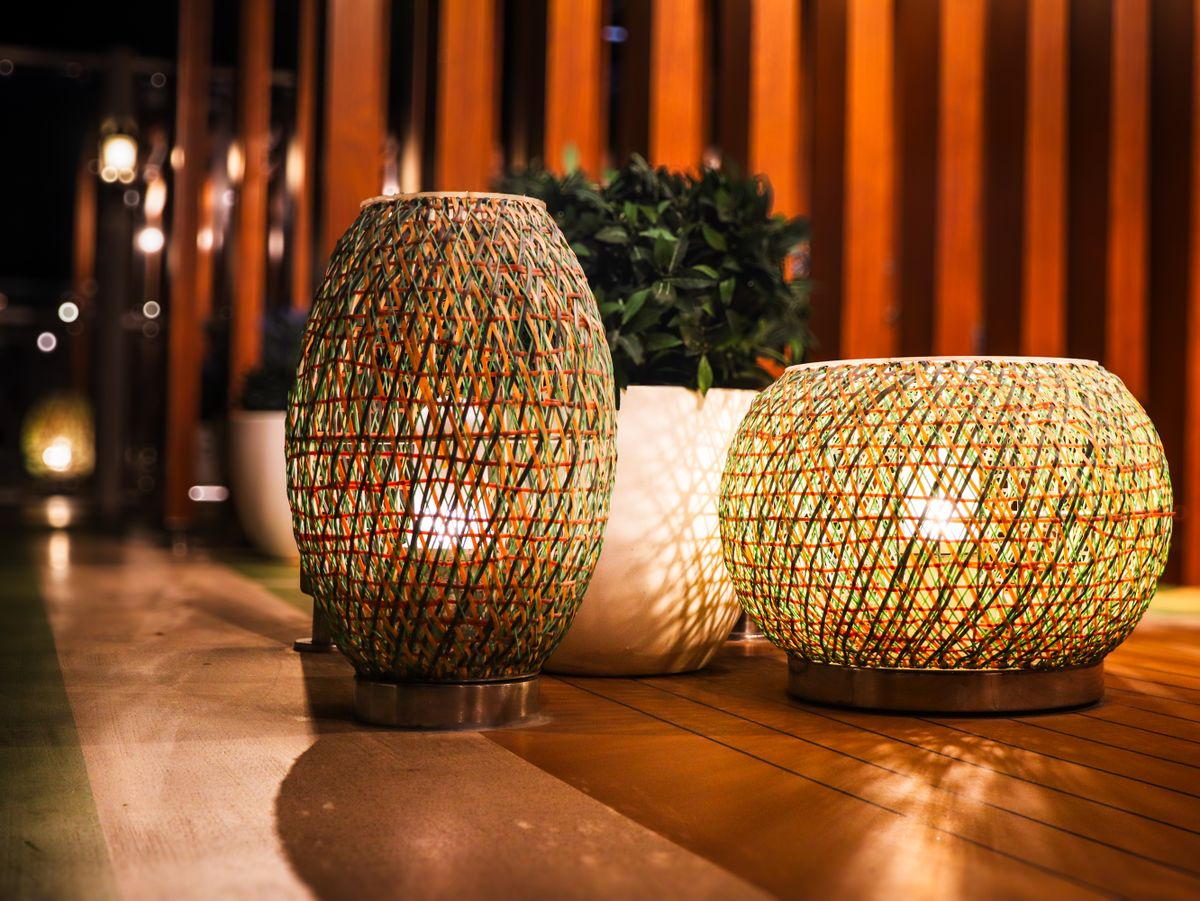
Photo by Sight See-RR on Pexels
Peak lumens tell you the first impression. Lumen-hours tell you the evening.
A lantern producing 60 lumens for 2 hours gives 120 lumen-hours. A lantern producing 35 lumens for 6 hours gives 210 lumen-hours. The second one is less impressive in a product photo, but it may serve dinner, cleanup, and late conversation better.
The U.S. Department of Energy explains lumens as the measure of light output for bulbs, which is useful, but solar products add another variable: stored energy. The moment the sun goes down, the lantern is spending a battery balance that was earned during the day.
Field observations from a practical patio test
These are not lab certifications. They are the kind of repeatable observations I use when deciding where a solar lantern belongs. I checked three common outdoor situations over several clear-to-partly-cloudy evenings, using a handheld lux meter at table height about 3 feet from the lantern and noting runtime until the light was no longer useful for navigation.
| Placement condition | Afternoon sun on panel | Initial reading at table | Reading after 3 hours | Usable runtime observed | Decision | |---|---:|---:|---:|---:|---| | Open hook, south/west exposure | 5.5–6.5 hours | 18–24 lux | 11–16 lux | 6–8 hours | Good primary patio placement | | Pergola edge, partial vine shade | 2.5–3.5 hours | 12–17 lux | 5–9 lux | 3–5 hours | Use as accent or add a second lantern | | Under covered porch, indirect light | under 1 hour | 5–8 lux | 1–3 lux | 1–2.5 hours | Move panel/lantern; not a fair solar location |
Two numbers are worth noticing. First, partial shade did not merely reduce performance a little; it often cut useful runtime by roughly a third to a half. Second, the “covered porch” location failed even though it looked bright to the eye during the day. Human vision adapts. Solar cells do not forgive shade the same way.
The solar budget: your patio has a climate, not just a style
The National Renewable Energy Laboratory’s PVWatts tool is built for photovoltaic energy estimates, not decorative lantern shopping, but it teaches the right habit: solar output depends heavily on location, tilt, season, and shading. A lantern that performs beautifully in Phoenix in June may be underfed in Portland in November.
For a small solar lantern, I translate that into a plain question: How many hours of direct or strong sun will the panel see?
Use this quick decision rule:
- 5+ hours of strong sun: One lantern can usually serve as a reliable ambient marker.
- 3–5 hours: Expect seasonal variation; use it for mood light or pair multiple lanterns.
- 1–3 hours: Treat it as decorative unless the panel can be moved.
- Less than 1 hour: You are asking a solar product to perform without fuel.
The comfort budget: diffuse light wins more often than bright light
Outdoor lighting is not only about seeing. It is about seeing comfortably.
The Illuminating Engineering Society and International Dark-Sky Association have long pushed the idea of responsible outdoor lighting: light should be useful, targeted, low-level, controlled, and warm when possible. Even when you are not designing a streetscape, the principle applies at patio scale.
A solar balloon lantern has one major design advantage: the diffuser increases the apparent size of the light source. That typically reduces the sharp, pinprick glare people dislike from exposed LEDs.
My take: the brightest solar lantern is usually the wrong patio lantern
Counter to what you’ll read elsewhere: I do not think most patios need the brightest solar lantern available. For conversation areas, lower-output diffuse light is often better because it preserves contrast, keeps pupils from constantly adjusting, and makes the edges of the yard feel calmer.
If you need to grill, carve food, read small print, or navigate stairs, add a dedicated task or path light. Do not force one decorative lantern to do every job. A good solar balloon lantern should make people linger, not squint.
A decision matrix for choosing and placing a Solar Balloon Lantern
Use this as a practical buying and setup checklist.
1. Define the job
Choose one primary role:
- Table mood light: soft glow within 3–5 feet.
- Path marker: visible from 10–20 feet, not necessarily bright at ground level.
- Party cluster: several lanterns creating a canopy or perimeter.
- Emergency backup accent: easy to find and carry, but not a substitute for a flashlight.
2. Estimate your evening demand
Write down your realistic use window:
- Early dinner: 2–3 hours after dusk.
- Weekend patio: 4–6 hours.
- Overnight marker: 8+ hours at low output.
3. Audit sun before you judge the product
Before deciding a lantern is weak, put it in the best solar position for two days:
- Face the panel toward the strongest afternoon sun.
- Avoid railing shadows, eaves, umbrellas, tree lace, and window screens.
- Wipe dust and pollen from the panel.
- Test after at least one full sunny charge cycle.
4. Check weather realism
Look for language about water resistance, not vague “outdoor” claims. The IEC 60529 ingress protection system is the standard behind IP ratings. In plain English, an IP rating helps indicate protection against solids and water. Decorative solar lanterns are commonly intended for rain exposure, but that does not mean they should sit in pooling water, be pressure-washed, or remain trapped full of condensation.
For balloon-style lanterns, also check the seam, hanging point, switch cover, and solar-panel housing. Those are the places where rough handling and water intrusion usually show up first.
5. Plan for battery aging
Rechargeable batteries are consumables. Heat, deep discharge, and repeated cycles reduce capacity over time. A lantern that ran 7 hours when new may not do that indefinitely.
My rule is to buy and place for a 25–30% performance cushion. If you need 5 hours of useful light, do not choose a setup that barely makes 5 hours in ideal June sun. Choose a placement and quantity that can tolerate weaker days.
What “good enough” light looks like outdoors
Indoor lighting norms do not translate perfectly outside. A dining room may use hundreds of lux on a table. A patio can feel pleasant at far lower levels because the visual task is simpler and the surrounding darkness is part of the experience.
For ambient outdoor gatherings, I generally like:
- 5–10 lux: orientation, outlines, low-key ambiance.
- 10–25 lux: faces, plates, drinks, casual conversation.
- 25+ lux: more functional, but can start to feel bright depending on glare and contrast.
When one lantern is not enough
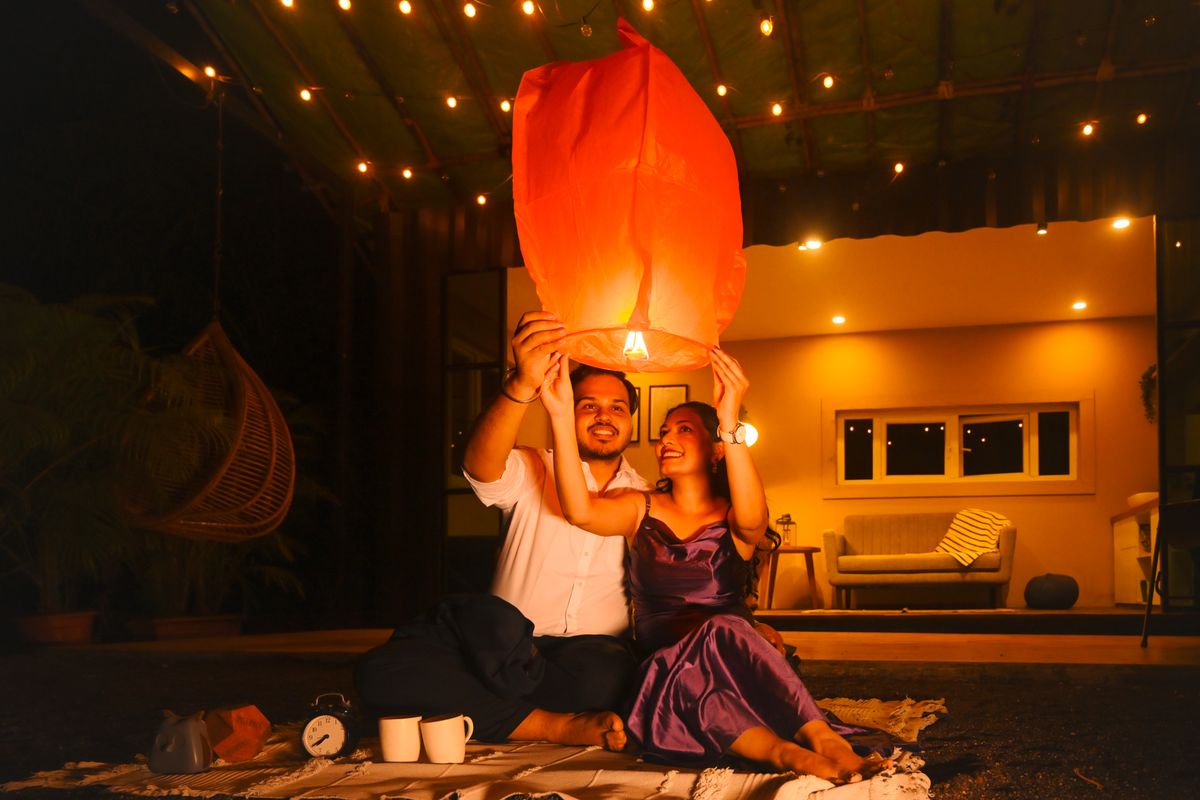
Photo by Prince Tuhin on Pexels
If the goal is a usable outdoor room, multiple lower-output lanterns often beat one bright lantern. Three reasons:
For a 10-by-12-foot seating area, I would rather use two to four soft lanterns around the perimeter than one bright unit at eye level in the center.
Common placement mistakes I see
The product is often blamed for problems that are really site problems.
- Hanging directly under an umbrella: lovely at night, starved by day.
- Placing near a porch light: can confuse some auto-on sensors if the sensor sees artificial light.
- Mounting at eye level: increases glare; higher or off-axis is usually better.
- Expecting winter performance to match summer: shorter days and lower sun angles reduce charge.
- Leaving film, pollen, or dust on the panel: small panels need a clean surface.
Practical checklist before your first evening
FAQ
How bright should a solar balloon lantern be for a patio table?
For relaxed dining and conversation, I would usually aim for roughly 10–25 lux on the table surface, which may come from one nearby diffuse lantern or several spaced around the seating area. Do not chase peak lumens alone. A softer lantern with longer runtime can be more useful than a high-output light that fades before the evening ends.
Will a solar lantern charge on a cloudy day?
Yes, but at a reduced rate. Bright overcast can still provide useful solar input, while heavy clouds, shade, or indoor window placement may provide very little. If your lantern only receives filtered light, expect shorter runtime. For dependable use, give the panel direct sun whenever possible and build in a 25–30% runtime cushion.
Is a solar balloon lantern waterproof?
It depends on the model and rating. Look for specific water-resistance language or an IP rating rather than assuming all outdoor products handle the same exposure. Rain resistance is different from submersion, pressure washing, or water pooling around electronics. The IEC IP-rating system is the reference point manufacturers use to describe ingress protection.
Why does my lantern turn on late, flicker, or shut off early?
The most common causes are inadequate charging, a dirty panel, shade that appears only part of the afternoon, a nearby artificial light affecting the dusk sensor, or an aging battery. Start by giving the lantern one full day in direct sun, cleaning the panel, and testing it away from porch lights. If runtime remains much shorter than when new, battery capacity may have declined.